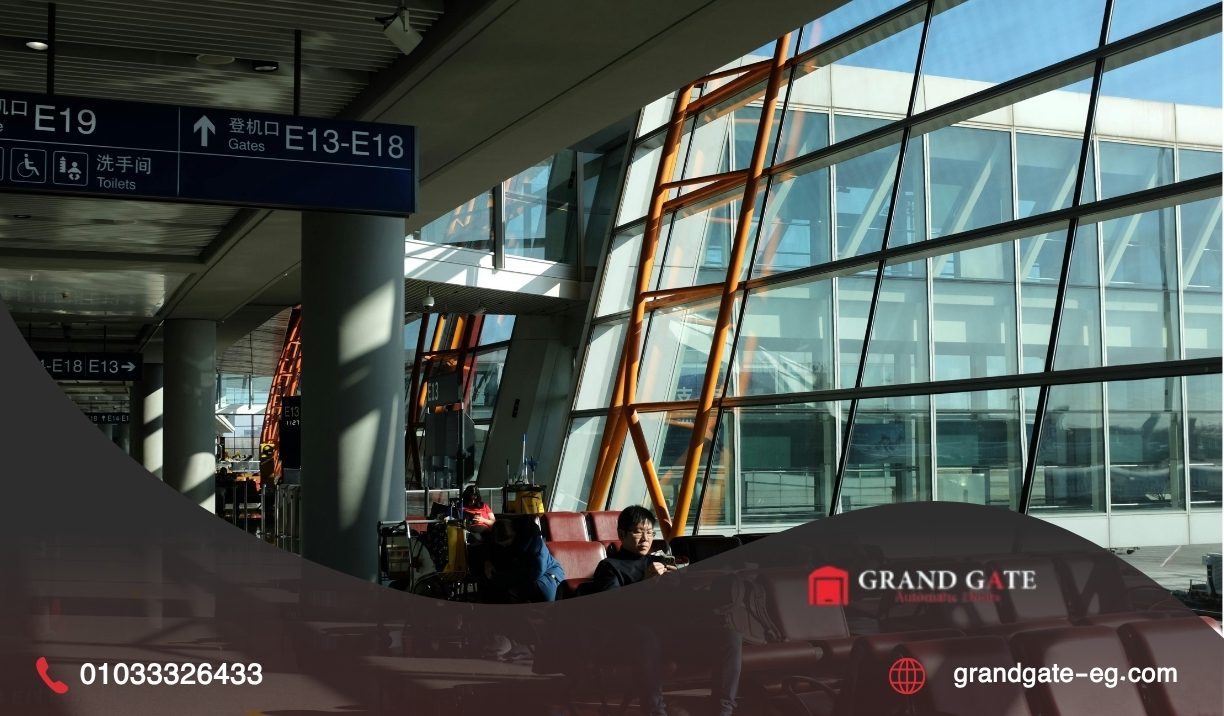
In the fast-paced world of global travel, the entrance of an airport serves as the first touchpoint for thousands of passengers daily. Grand Gate Eg understands that in the Egyptian aviation sector, combining aesthetic appeal with high-performance functionality is essential for maintaining smooth operations. Selecting the right Automatic Sliding Doors for Airports is not merely a design choice but a strategic investment in passenger safety, climate control, and architectural excellence. As modern terminals evolve into smart hubs, these specialized entrance systems ensure that high traffic volumes are managed with precision and reliability.
What Are Automatic Sliding Doors for Airports?
These systems are sophisticated architectural solutions designed to handle the unique demands of aviation environments. Unlike standard commercial entrances, these systems are engineered for continuous cycles, extreme durability, and integration with complex security infrastructures.
Definition and How They Work
Automatic Sliding Doors for Airports are motorized entrance systems that utilize advanced sensors to detect approaching traffic and slide panels horizontally to clear a path. They operate via a high-torque motor connected to a drive belt, which moves the door carriers along a precision-engineered track. The system is governed by a microprocessor controller that manages opening speeds, closing forces, and safety protocols in real-time.
Why Airports Use Automatic Sliding Door Systems
Airports prioritize these systems because they facilitate a completely hands-free experience. In an environment where travelers are often carrying heavy luggage or pushing trolleys, manual doors would create significant bottlenecks. Furthermore, these systems are vital for maintaining the pressurized and climate-controlled environments typical of large terminal buildings.
Key Components of an Airport Sliding Door System
To understand the reliability of the solutions provided by Grand Gate Eg, it is important to recognize the core elements that make up a heavy-duty entrance.
- Motion sensors: Microwave or radar sensors that detect movement from a distance.
- Safety sensors: Infrared light curtains that prevent the doors from closing if an obstruction is detected.
- Door operators: The heavy-duty motor and controller assembly that powers the movement.
- Glass panels: High-strength tempered or laminated glass designed for safety and clarity.
- Emergency breakout systems: Hardware that allows door panels to swing outward in the event of an emergency.
- Access control integration: Connections to central security systems for restricted areas.
Types of Automatic Sliding Doors Used in Airports
Different areas within a terminal require specific door configurations to optimize space and traffic flow.
Single Sliding Automatic Doors
These consist of a single moving leaf that slides to one side. They are ideal for smaller side entrances or internal office corridors within the terminal where the opening width requirement is standard.
Telescopic Sliding Doors
For areas where space is limited but high traffic is expected, telescopic systems are the preferred choice. These doors feature multiple panels that slide over each other, providing a much wider clear opening compared to standard sliding systems of the same overall width.
Curved Automatic Sliding Doors
Often found at main terminal entrances or VIP lounges, curved systems offer a striking architectural statement. They provide a wider opening than flat doors and create a natural vestibule that helps with wind resistance and climate isolation.
Hermetic Sliding Doors
In specialized airport zones such as medical clinics, laboratories, or high-tech server rooms, hermetic doors are used. These are designed to provide an airtight seal when closed, preventing the exchange of air and contaminants.
Security-Controlled Sliding Doors
These systems are integrated with biometric scanners or card readers. They are essential for customs, immigration, and employee-only zones, ensuring that only authorized personnel can move between different airport security tiers.
Learn everything you need to know in the Automatic Doors Guide, including door types, automation systems, safety sensors, and the best solutions for commercial and industrial facilities.
Benefits of Automatic Sliding Doors in Airports
The implementation of Automatic Sliding Doors for Airports offers a range of logistical and financial advantages for facility managers.
- Enhanced passenger flow: By eliminating the need to stop and pull a handle, travelers move through the terminal up to 30% faster.
- Hygienic touchless entry: Reducing physical contact points is a key health safety measure in post-pandemic aviation design.
- Structural durability: These systems are built to withstand millions of cycles with minimal wear.
- Visual transparency: Large glass surfaces improve natural lighting and allow security personnel to have better visibility.
- Brand prestige: Modern, smooth-operating doors reflect the high standards of the airport and the country.
Improved Passenger Flow
Efficiency is the primary goal of any transportation hub. These doors react instantly to movement, ensuring that even during peak travel seasons, the entrance and exit points do not become congested areas.
Touchless Entry and Hygiene
With thousands of people from different parts of the world passing through, maintaining hygiene is critical. Touchless systems significantly reduce the spread of germs, making the terminal a safer environment for everyone.
Energy Efficiency and Climate Control
Airports are massive spaces that require significant energy to cool, especially in the Egyptian climate. Automatic Sliding Doors for Airports minimize the time the entrance is open, acting as a barrier that keeps conditioned air inside and prevents external heat from entering.
Upgrade building safety with Sliding Fire Doors designed for demanding fire-rated applications.
Safety Standards and Airport Compliance Requirements
Safety is non-negotiable in aviation. Grand Gate Eg ensures that every installation meets international and local rigorous standards.
International Safety Standards
Most high-end systems adhere to EN 16005 or ANSI/BHMA A156.10. These standards dictate everything from the maximum closing speed to the sensitivity of the safety sensors.
Fire Safety and Emergency Escape Features
In the event of a fire or power failure, Automatic Sliding Doors for Airports must allow for immediate evacuation. The “breakout” or “panic” feature allows the sliding panels to be pushed outward like a swing door, providing a clear escape path for large crowds.
Important Standards to Mention
- ANSI/BHMA standards: American standards for power-operated pedestrian doors.
- EN 16005: The European standard for safety in use of power-operated doors.
- ADA compliance: Ensuring the doors provide enough width and timing for people with disabilities.
- Airport security regulations: Specific local mandates for access control integration.
Best Materials for Airport Automatic Sliding Doors
The longevity of an entrance system depends on the quality of the materials used in its construction.
- Tempered Glass: Highly resistant to impact and breaks into small, blunt pieces if shattered.
- Aluminum Frames: Lightweight yet incredibly strong, aluminum is resistant to the corrosion often found in coastal or high-humidity environments.
- Stainless Steel Systems: Used for a premium look and maximum durability in the most demanding high-traffic areas.
- Energy-Efficient Glass: Double-glazed units with Low-E coatings to further enhance thermal insulation.
How Automatic Airport Doors Improve Energy Efficiency
Sustainability is a growing focus for modern airports. Automatic Sliding Doors for Airports play a vital role in reducing the carbon footprint of the facility.
Reducing Air Leakage
By utilizing high-quality weather stripping and brush seals, these doors prevent air from escaping through gaps. This reduces the load on the airport’s HVAC systems, leading to lower utility costs.
Smart Sensor Activation
Modern sensors can distinguish between a person walking toward the door and someone simply walking past it. This “directional detection” ensures the door only opens when necessary, saving energy.
Integration with HVAC Systems
Advanced building management systems can link the door operation with the air conditioning. If a door is held open for too long, the system can adjust the air curtain or internal climate control to compensate.
Automatic Sliding Door Systems for Different Airport Areas
A one-size-fits-all approach does not work for airport infrastructure. Grand Gate Eg provides tailored solutions for various zones.
- Main Terminal Entrances: Large, heavy-duty doors with high-speed operators to handle thousands of passengers per hour.
- Security Checkpoints: Integrated systems that can be instantly locked or controlled by security personnel.
- Boarding Gates: Compact sliding doors that manage the flow of passengers onto the jet bridge.
- VIP Lounges: Elegant, often curved or frameless glass doors that offer a premium aesthetic.
- Baggage Claim Areas: Extra-wide doors designed to accommodate passengers with multiple large trolleys.
Smart Technologies in Modern Airport Sliding Doors
The future of Automatic Sliding Doors for Airports lies in digital integration and artificial intelligence.
- AI-Based Motion Detection: Sensors that can predict passenger behavior to optimize opening and closing cycles.
- IoT Monitoring Systems: Doors that report their own status to a central dashboard, allowing facility managers to track usage.
- Touchless Access Control: Integration with mobile phone credentials or facial recognition for staff-only areas.
- Predictive Maintenance: Software that alerts technicians before a part fails based on the number of cycles performed.
Installation Process for Airport Automatic Sliding Doors
Installing a door system in an active airport requires meticulous planning to avoid disrupting passenger movement.
Site Inspection
Grand Gate Eg technicians perform a detailed analysis of the structural opening, floor levels, and surrounding traffic patterns before any hardware is ordered.
Door System Design
The design phase involves choosing the right operator strength and glass type based on the specific location’s wind load and traffic density.
Installation and Testing
Once the structure is prepared, the frames and operators are installed. This is followed by a rigorous testing phase where sensors are calibrated to ensure 100% safety coverage.
Maintenance Requirements and Long-Term Performance
To ensure that Automatic Sliding Doors for Airports remain reliable, a structured maintenance program is essential.
- Monthly inspections: Checking sensor alignment and cleaning the floor tracks to prevent obstructions.
- Biannual professional audits: Testing the motor, drive belt tension, and emergency battery backups.
- Software updates: Ensuring the controller is running the latest firmware for optimal performance.
- Component replacement: Replacing wearable parts like rollers and belts before they cause a system failure.
Choosing the Best Automatic Sliding Door Supplier for Airports
When selecting a partner for airport infrastructure in Egypt, experience and local support are the most important factors.
- Verify certifications: Ensure the supplier provides hardware that meets international safety codes.
- Check local references: A reliable supplier like Grand Gate Eg will have a portfolio of successful installations in high-traffic environments.
- Assess support services: Choose a company that offers 24/7 emergency repair services, as airport doors cannot afford downtime.
- Customization: The supplier should be able to provide bespoke finishes and sizes to match the architectural vision of the terminal.
Cost Factors of Automatic Sliding Doors for Airports
While we focus on quality, understanding what influences the investment helps in budget planning.
- Door Size and Configuration: Larger openings or complex telescopic designs require more materials and stronger operators.
- Automation Features: The inclusion of smart sensors, IoT modules, and high-speed motors increases the initial cost but offers long-term savings.
- Glass Quality: Upgrading to hurricane-rated or high-insulation glass impacts the price point.
- Installation Complexity: Working in high-security zones or during night shifts can affect the labor costs associated with the project.
At Grand Gate Eg, we pride ourselves on being the leading provider of entrance solutions in Egypt. We combine global technology with local expertise to deliver Automatic Sliding Doors for Airports that stand the test of time. Our team is dedicated to ensuring that every passenger’s journey begins and ends with a smooth, safe, and professional experience through our doors.
Whether you are designing a new terminal or upgrading an existing facility, our specialists are ready to provide the technical guidance and high-quality hardware your project deserves.
Contact Grand Gate Eg today to discuss your airport infrastructure needs.
Call now or book your service via the number: 01033326433